There’s a question we get more often than you’d expect: “So you guys are distributors, right?”
No. We’re manufacturers.
It’s an easy mistake to make. We’re responsive like a distributor. We carry inventory like a distributor. We can turn quotes around the same day and ship material fast. But that’s where the similarity ends.
What happens between the time you place an order and the time it arrives? That’s the difference. And it matters more than most people realize.
What a Distributor Actually Does
Let’s be clear about what distributors do, because they serve a real purpose in this industry.
A distributor buys material from mills and manufacturers, warehouses it, and resells it. They’re in the logistics business. They stock standard sizes in standard alloys and ship them out when you need them. Good distributors do this really well. They have locations near you, they carry what moves, and they can get you material fast.
What they can’t do is change the material. If you need a size they don’t stock, you’re either waiting for them to source it or you’re buying the next size up and machining off the excess. If you need a specialty alloy they don’t carry, you’re out of luck. If you have a question about metallurgy or processing, they’re calling someone else to get you an answer.
There’s nothing wrong with that model. It works for a lot of applications. But it’s not what we do.
What Happens Inside Our Facilities
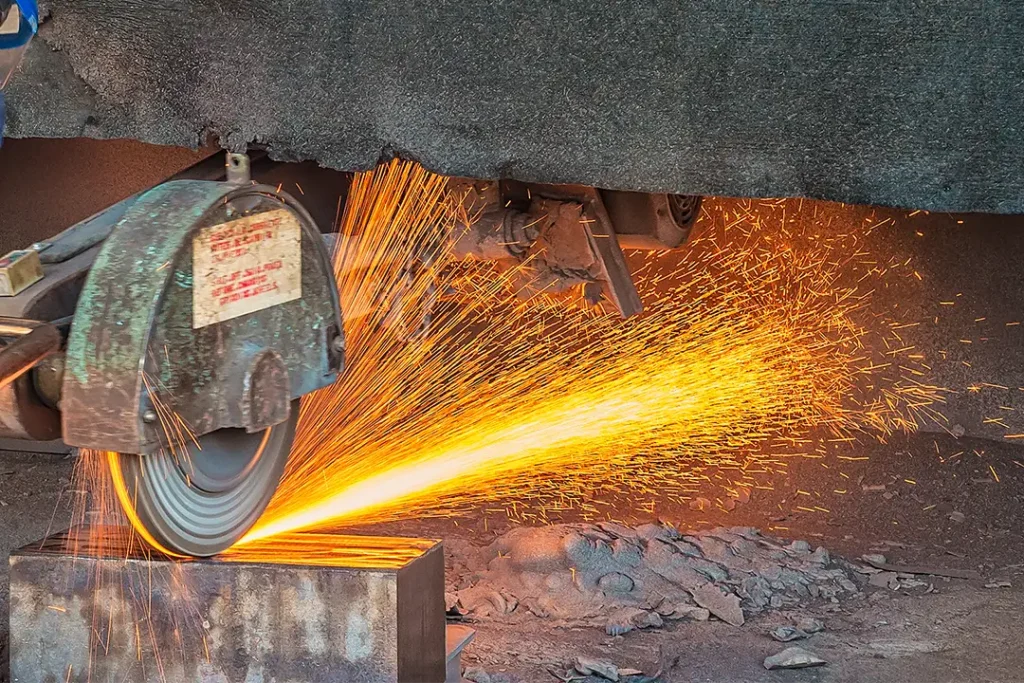
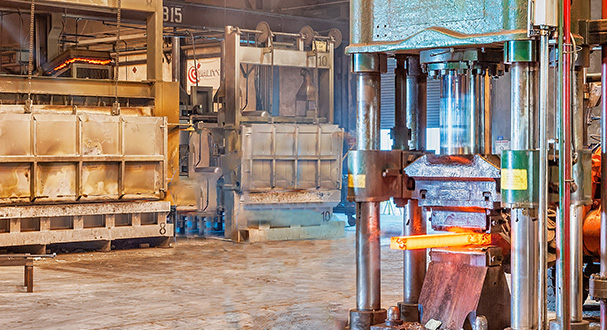
At STS, we start with raw material and we transform it. Forging. Rolling. Heat treating. Straightening. Testing. Cutting. Every one of those steps happens in facilities we own and operate.
When you call Sierra Alloys in California, you’re talking to people who work in a building where titanium gets forged and rolled into bar. When you work with TSI Titanium in Pennsylvania, your material is being processed on equipment that TSI owns, by people TSI employs, following procedures TSI developed.
That’s manufacturing. Not warehousing.
Here’s why that matters to you.
Custom Sizes Without the Wait
If a distributor doesn’t stock the size you need, you have two options. Buy bigger and machine it down, or wait for someone else to make it.
We can make it. If you need 3.625 inch diameter bar and nobody stocks that, we can produce it. Not by calling someone else. By running it ourselves.
That flexibility is only possible because we control the process. We have the forging presses, the rolling mills, the heat treat furnaces. We’re not asking a mill to squeeze in a custom run between their production jobs. We’re scheduling it on our own equipment.
Lower minimums, too. A big mill might require 10,000 or 20,000 pounds to run a custom size. We can work with a lot less than that. Because we’re not trying to optimize a massive production schedule. We’re trying to get you what you need.
Alloys That Don’t Sit on Shelves
Standard Ti-6Al-4V makes up the bulk of the titanium market. That’s what most distributors stock because that’s what moves fastest.
But aerospace and defense applications often call for something different. Ti-10V-2Fe-3Al for landing gear. Ti-6Al-2Sn-4Zr-2Mo for high-temperature applications. Solution-treated and aged bar with specific mechanical properties.
We keep starting stock for multiple specialty grades precisely because we can process them in-house. A distributor carrying 10-2-3 would need to find someone to roll it every time they got an order. We just run it.
Sierra Alloys is one of the few domestic sources that will make 10-2-3 bar. TSI Titanium is one of the few that produces STA bar. These aren’t catalog items you can get anywhere. They’re capabilities you get from working with a manufacturer.
Testing That Stays In-House
Here’s something that surprises people.
Ultrasonic testing used to take us four weeks. Not because the test itself takes that long. Because we were sending material out to a third-party lab, waiting in their queue, and then waiting for results to come back.
Four weeks of lead time just for testing. On material that was otherwise ready to ship.
So we invested in our own equipment. Now that same test takes four hours. Material comes off the line, gets tested the same day, and ships. No waiting in someone else’s queue. No shipping material back and forth. No wondering what’s happening to your order while it sits at an outside facility.
That’s a manufacturing decision. We saw a bottleneck, we invested in capability, and we fixed it. A distributor can’t do that. They don’t control the process.
Traceability From Start to Finish
In aerospace, you need to know where your material came from. Not just who sold it to you. Where the raw material originated, how it was processed, what tests were performed, who signed off at each step.
When you’re working with a manufacturer, that chain is short and clear. We bought the input material. We processed it. We tested it. We certified it. We shipped it. Every step is documented in systems we control.
When material passes through multiple hands, traceability gets complicated. Who processed it? Where? Under what quality system? Did anything happen to it between there and here?
We can answer those questions because we did the work. That’s not a paperwork advantage. It’s a process advantage.
The Responsiveness Question
So if we’re manufacturers, why do we act like distributors when it comes to service?
Because we decided to.
A lot of manufacturers hide behind their production schedules. They’re big, they’re busy, and if you want to work with them you’ll wait your turn. Getting a quote takes a week. Getting someone on the phone takes luck. Getting a delivery date you can trust takes prayer.
We run seven facilities. We have the capacity to handle real volume. But we built our commercial operations to be responsive. Quotes come back the same day. Phones get answered by people. Questions get routed to someone who actually knows the answer.
That’s not because we’re small. It’s because we chose to operate that way.
Why This Matters for Your Programs
When you’re qualifying a supplier, you’re not just qualifying a product. You’re qualifying a process.
If you qualify a distributor, you’re actually qualifying whoever they source from. If that changes, your qualification might not hold up. If the distributor switches mills or the mill changes something in their process, you might have questions to answer.
If you qualify STS, you’re qualifying our process. The one we control. The one that doesn’t change based on who had the best price this quarter. The material you get in year three of a program comes from the same equipment, the same procedures, the same quality system as the material you qualified in year one.
For aerospace and defense programs, that stability matters.
Seven Facilities, All Manufacturing
Let’s be specific about what we have.
Sierra Alloys in Irwindale, California. Forged and rolled titanium bar. Custom sizes and specialty alloys.
TSI Titanium in Washington, Pennsylvania. Forged and rolled bar with in-house ultrasonic testing. One of the few domestic producers of STA bar.
Sierra Sheet & Plate in Adairsville, Georgia. Titanium sheet and plate processing.
Brown-Pacific in Garden Grove, California. Nickel alloys and specialty steels.
Valley Forge in Paramount, California. Additional titanium bar capacity.
Brown Europe in France. European operations for international programs.
Every one of these is a manufacturing facility. Equipment on the floor. People running processes. Material being transformed, not just moved.
Let’s Talk About What You Need
If you’ve been working with distributors and it’s working fine, we’re not here to tell you that’s wrong.
But if you need custom sizes without massive minimums, if you need specialty alloys that don’t sit on standard shelves, if you need the stability of working with the people who actually make your material, we should have a conversation.